July 24, 2026
What Actually Happens During an Eye Exam
If you've never had a comprehensive eye exam — or it's been a while — knowing what's coming makes the whole thing a lot less intimidating. Here's what a typical appointment looks like.
Before your exam
Bring your current glasses or contacts, a list of any medications, and your insurance info if you have vision coverage. If you normally wear contacts, wear your glasses to the appointment instead — parts of the exam are best done without lenses in.
Visual acuity testing
The classic "read the chart" test, measuring how clearly you see at different distances. It's the baseline for figuring out your prescription.
Refraction test
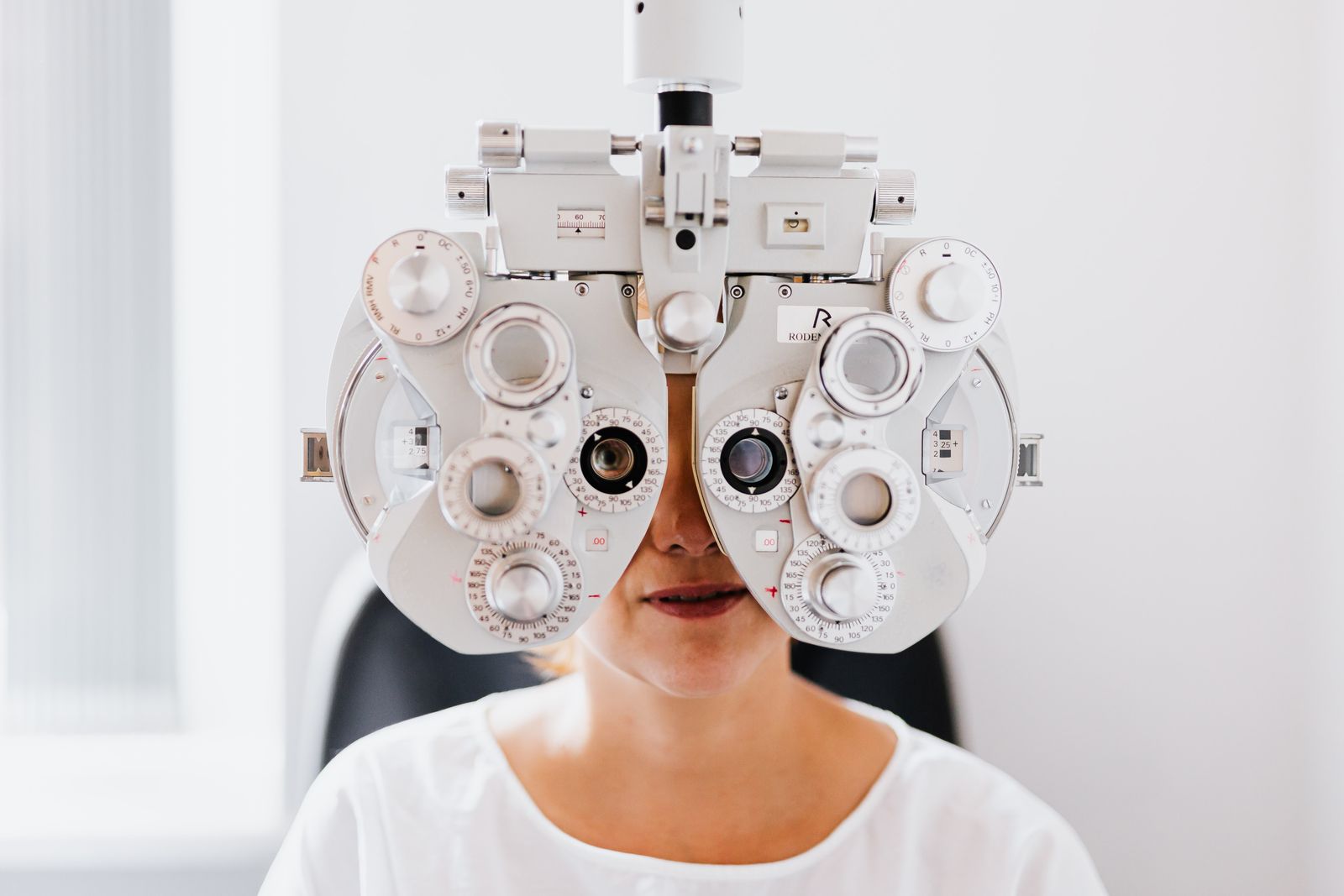
Using a phoropter, your optometrist shows you a series of lens options and asks which looks clearer — this dials in your exact prescription for glasses or contacts.
Eye health screening
Your optometrist checks the overall health of your eyes, looking for early signs of glaucoma, cataracts, and macular degeneration. This often involves a bright light and sometimes drops to dilate your pupils for a clearer view of the retina.
Additional testing, if needed
Depending on your age, symptoms, and history, your optometrist may run extra tests — checking eye pressure or digital retinal imaging — for a fuller picture.
Your prescription and next steps
At the end, you'll get a written prescription valid for glasses, plus any recommendations. Interested in contacts too? That needs a separate contact lens fitting — the eye exam alone doesn't include the extra measurements a contact lens prescription requires. If you need new lenses or frames, our opticians can help you right in the same visit.
Book your exam
Book online or visit our Dixie Road boutique — we see patients from Mississauga, Etobicoke, Brampton, and Oakville, with direct billing available to most major insurers.